Relationship between gold and silver market prices and antique market prices
Posted by WATANABETAIGA

Precious metals such as gold and silver have been used as currency since ancient times, and even today, they are traded as assets with international currency characteristics.
Many people have probably heard the news that the price of gold has been rising in recent years, but the international price of silver is also skyrocketing similarly.
In Japan, this trend has been particularly pronounced due to the weakening yen in recent years, and the price has more than doubled compared to before the COVID-19 pandemic in 2020. (As of April 9, 2024)
Here, I will talk about the relationship between the gold and silver markets and the antique market (mainly antique silver).

1. The Rise in Gold and Silver Prices and Antique Prices
Fluctuations in the gold and silver markets also cause fluctuations in the market prices of antiques made of gold or silver.
For similar items (in terms of era, quality, condition, design, etc.), items with a greater weight of gold or silver are generally more expensive.
However, in the case of antiques, the price is not determined solely by the weight of the gold or silver used. Many factors affect the price, including quality, design, condition, rarity, and supply-and-demand balance (popularity).
How Market Fluctuations Affect Different Items Differently
For silver products, items with a greater weight of silver, such as salvers and teapots, are more susceptible to fluctuations in the silver market, while smaller items such as card cases are less affected.
For silver-plated items, the impact is even smaller.
However, when gold and silver prices are rising, demand for them as investment assets increases, so the prices in the entire antique market, including silver-plated products, tend to rise.
2. Fluctuations in the Gold-to-Silver Ratio
Currently (as of April 9, 2024), the price of gold per gram is 12,600 yen and the price of silver is 152 yen, a difference of about 80 times.
This ratio is called the "gold-to-silver ratio."
Because of factors such as the abolition of the gold standard and exchange rates, it cannot be compared simply, but looking at a long history, the gold-to-silver ratio is currently very high.
The value of silver when antique silver products were made was relatively higher than today, and they were more luxurious than they seem today.
The Changing Value of Gold and Silver Throughout History
In Europe during the Roman era, the price difference was about 10 times, and even around the mid-19th century, it was about 15 times.
In Japan, until around the end of the Edo period, the ratio was about 5 times, which was lower than in Europe and the United States, so Japanese gold coins also flowed out of the country in large quantities.
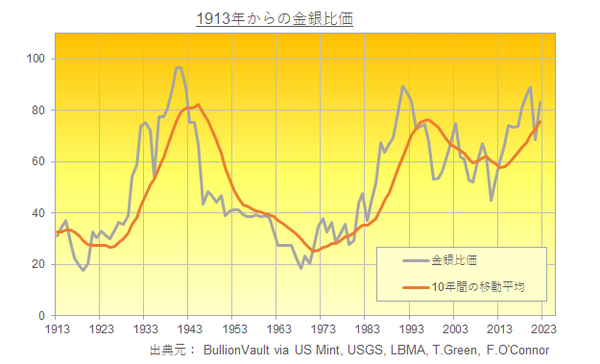
The gold-to-silver ratio has fluctuated greatly when large-scale ore veins were discovered or new refining technologies were developed.
In recent years, the gold-to-silver ratio has become higher partly because the demand for silver halide film, which accounted for much of the industrial demand for silver, fell sharply due to the transition from film cameras to digital cameras.
3. The Soaring Price of Silver and the Disposal of Antique Silver
The Reversal of Antique Prices and Scrap Prices
The price of antique silver products is generally never lower than the value of the weight of silver used.
However, in cases of such a rapid rise in prices, the market price of antique silver products and the scrap price of silver can sometimes be reversed.
In particular, items that are in poor condition, dirty, or require repair for use may sell for more if they are scrapped into silver bullion rather than sold as antiques.
The fact that the number of craftsmen who repair silver products is decreasing and repair costs are rising is also likely a cause.
Lost Crafts and the Role of Conveying Value
By being scrapped, valuable antiques are lost, and as this continues, the number of antiques remaining today will decrease.
Even if you try to make something identical to an antique from that time, there are many things that are impossible with today's technology.
To prevent antiques that should still have value from being scrapped, I believe it is my role to convey the charm of antiques and maintain their value.
Summary
The prices of antiques made with gold or silver as materials can be affected by fluctuations in the gold and silver markets.
However, the value of antiques involves many factors beyond the gold and silver markets, so it is important to recognize their appeal not only as investment assets but also as antiques.
Even if gold and silver prices fall in the future, their historical background, artistry, and other values will not decrease.