Antique decoration with "bird" motif
Posted by WATANABETAIGA

Birds have long been one of the most popular motifs in Western antiques. They carry a variety of meanings, from mythology and religion to reverence for nature, and have been depicted in many different ways throughout history.
In particular, many pieces of European antiques from around 1900, which we carry in abundance, feature birds as decorative motifs.
Meanings
Bird motifs carry the following meanings.
Each of these meanings is incorporated into a variety of designs.
- Good Fortune: Pigeons, swallows, owls, etc.
- Love: Swans, doves, peacocks, etc.
- Peace: Doves, doves carrying olive branches, etc.
- Victory: Eagles, hawks, etc.
- Wisdom: Owls, crows, etc.
- Life: Phoenixes, etc.
- Soul: Birds were believed to carry the souls of the deceased to heaven
- Freedom: Birds in flight have long been considered symbols of freedom
History
Birds have long been used as decorative motifs in Western antiques.
- Ancient Times: Strong mythological and religious connotations
- Middle Ages: Influenced by Christianity, with strong religious connotations
- Renaissance: Realistic depictions become predominant
- 18th Century: Influenced by the Rococo style, with elegant and delicate expressions
- 19th Century: Influenced by Naturalism, realistic depictions become predominant once again
Depending on the era, they have been expressed in various ways in decorative designs, from taking on strong religious connotations to becoming realistic depictions or being incorporated into stylized designs.
The 19th-Century Rise of Japonisme
In the latter half of the 19th century, Japanese art such as ukiyo-e prints exported from Japan to Europe had a major influence on Western art, and Japanese-inspired designs known as the “Japonisme style” became popular during this period.
As a result, floral and bird motifs from the “flowers, birds, wind, and moon” tradition came to be used more frequently.
In addition to doves and eagles, familiar little birds such as robins also began to be frequently featured as motifs.
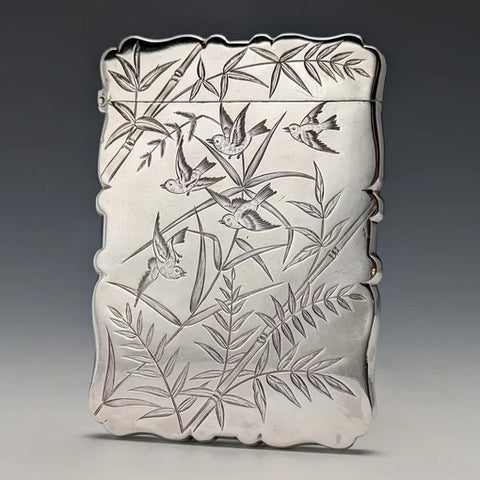
(Japonisme-Style Card Case)
Bird motifs are also widely used in the British Arts and Crafts movement, led by William Morris and influenced by Japonisme, as well as in the related Art Nouveau movement.
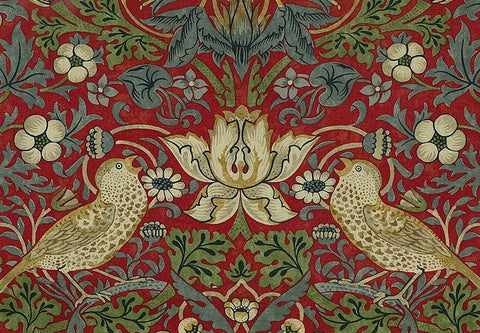
(William Morris's Strawberry Thief)
Summary
Bird motifs in Western antiques have carried a variety of meanings throughout their long history and have been depicted in many different ways depending on the era.
Even today, their appeal has not faded, and they continue to be loved by many.
Personally, because I used to keep little birds, I often end up purchasing bird-themed antiques whenever I come across them.
I look forward to discovering more bird-themed antiques and introducing them to you.
TAGS:
SHARE: